

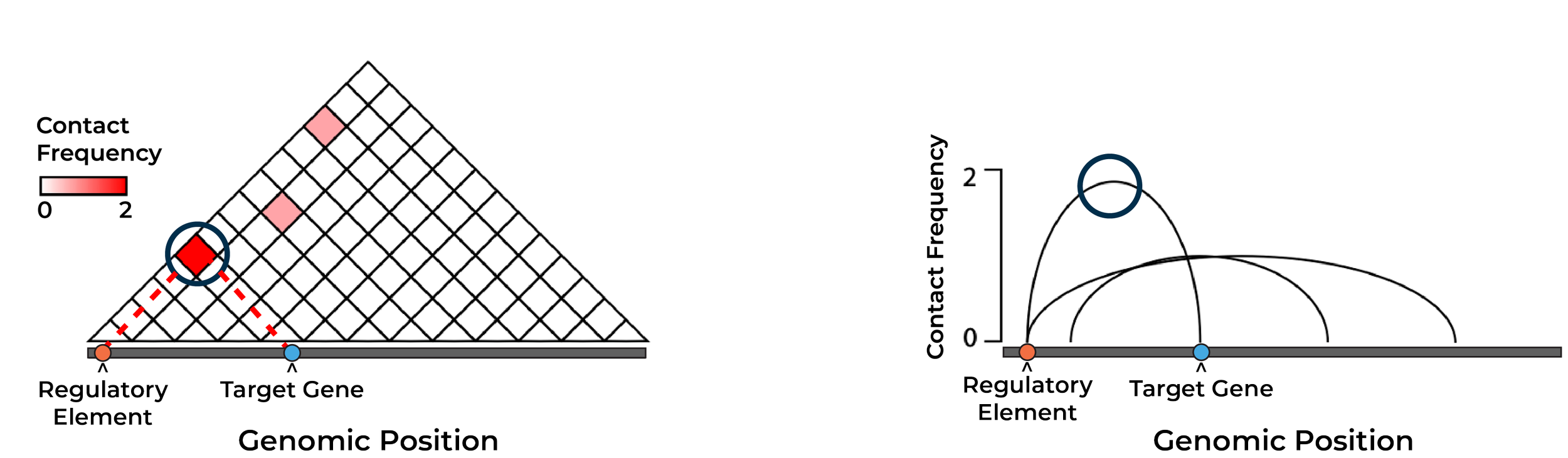
Multi-omics assays such as RNA-seq, ATAC-seq, ChIP-seq, and methylation profiling, provide linear data that correlates with gene expression. 3-Dimensional (3D) Genomics adds a spatial layer, revealing the 3D chromatin architecture that physically brings regulatory elements into contact with their target genes.
Uncover the Mechanisms of Gene Regulation
By linking chromatin accessibility, epigenetic state, DNA-binding sites, and expression to their true spatial context, 3D Genomics uncovers the mechanisms driving regulation — not just the signals or factors associated with it. That's the difference between knowing what changed and understanding how and why it changed.
Complementary Views of the Same Genome
3D Genomics does not replace your existing multi-omics assays. It makes them more interpretable by physically linking regulatory elements to the expressed gene.
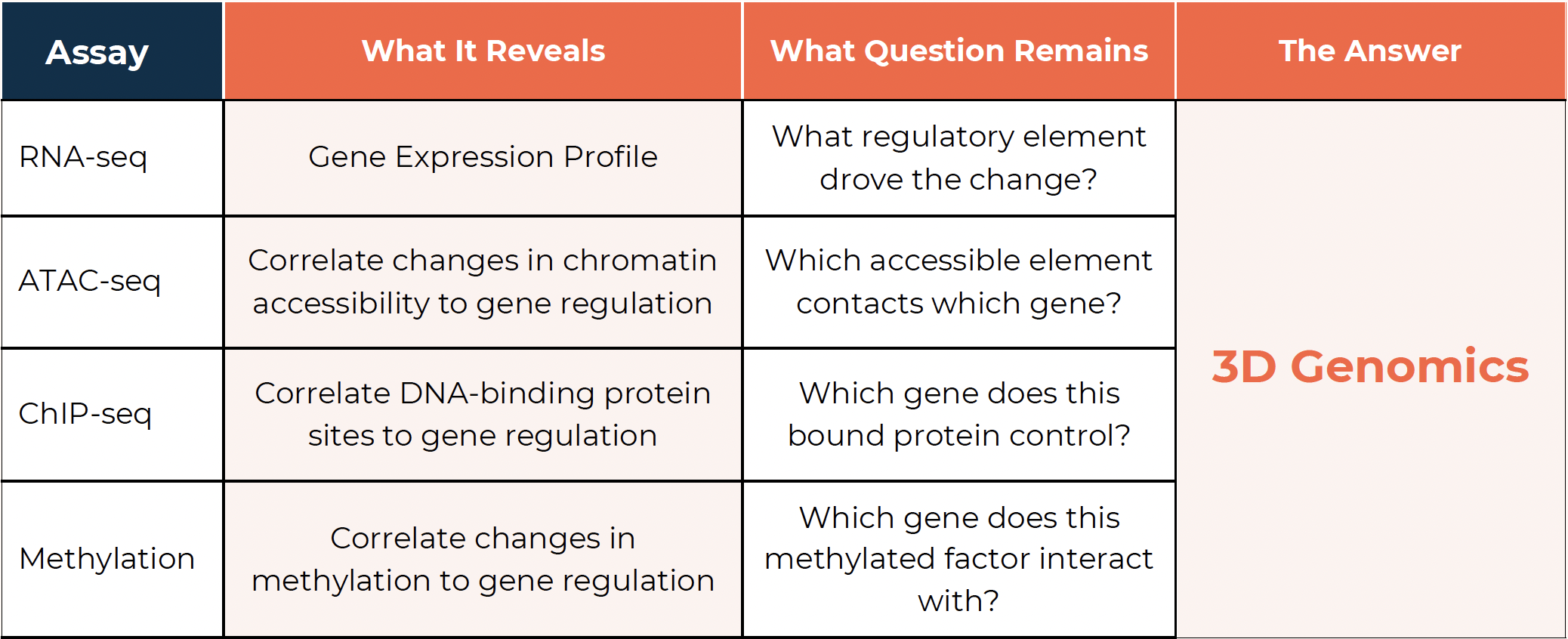
Each multi-omics assay tells you something important about gene regulation, but each one stops short of a vital question. RNA-seq shows which genes changed their expression, yet not which regulatory element drove that change. ATAC-seq maps where chromatin opens and closes, but it can't tell you which accessible elements physically interact with which genes. ChIP-seq pinpoints where DNA-binding proteins sit on the genome, but does not reveal which gene each bound protein controls. Methylation profiling tracks epigenetic changes linked to regulation, but not how those changes connect to genes that may sit far away along the chromosome. 3D Genomics closes the gap by identifying which regulatory elements physically contact which genes, turning a set of correlated factors into causal drivers of gene regulation.
Beyond Identifying Gene Expression Changes
Linear multi-omics assays identify factors that correlate with changes in gene expression in a given sample. 3D Genomics provides direct evidence as to which of those factors is driving the gene being turned on or off. The spatial context that 3D Genomics data offers uncovers relationships missed by linear sequencing, revealing long-range physical interactions that influence gene function. A 3D multi-omic view offers new insights into complex diseases and regulatory mechanisms, ultimately providing a more holistic representation of key biological systems.
Without 3D Genomics
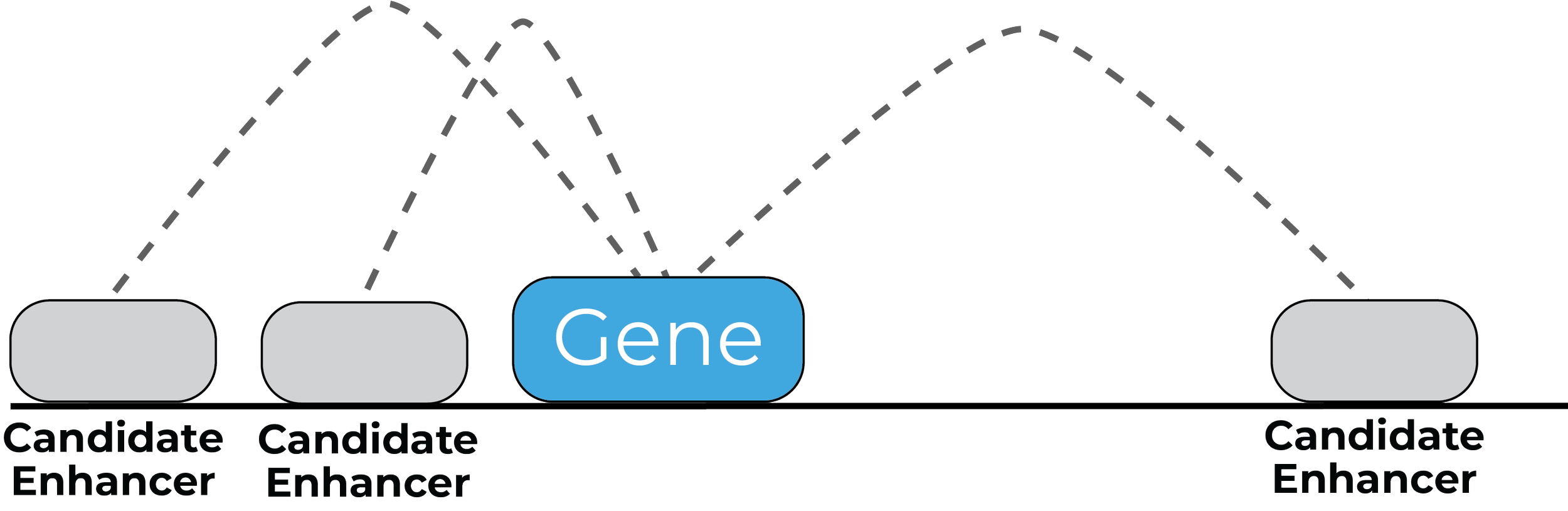
Linear data identified several candidate enhancers — some proximal, some distal — that might be affecting gene regulation in a given phenotype.
With 3D Genomics
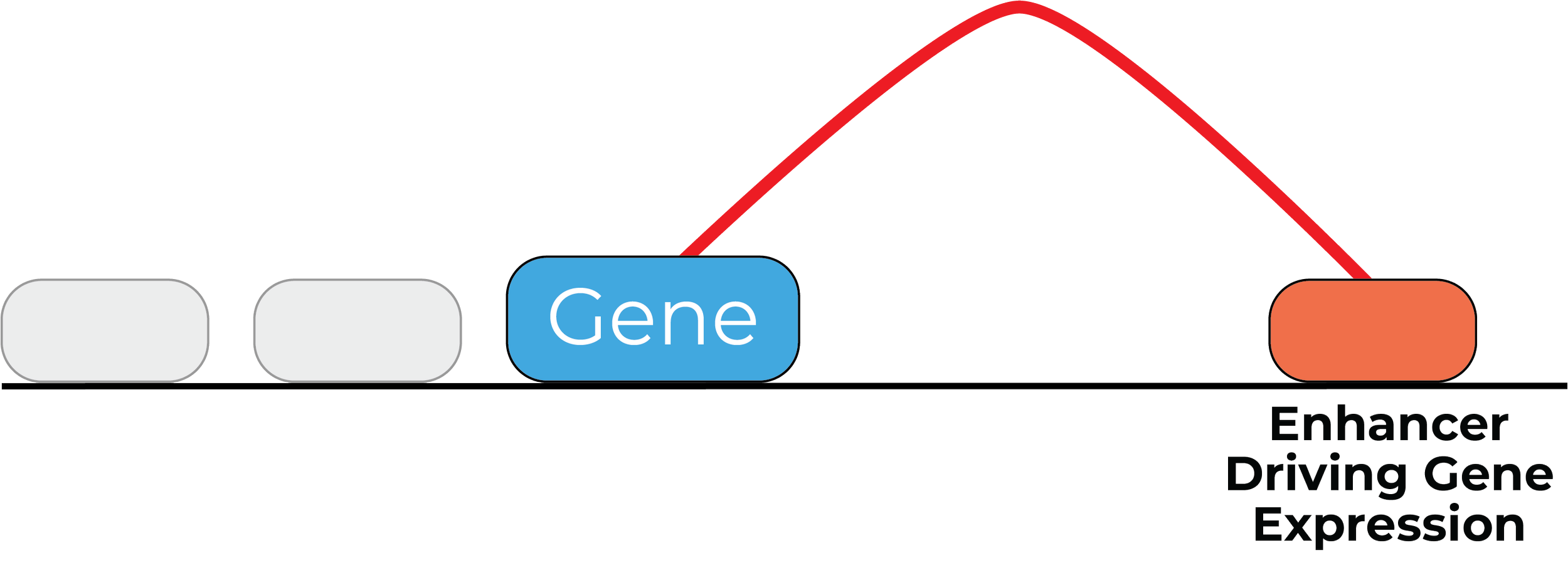
3D Genomics provided direct evidence linking one specific enhancer out of this pool of candidates to its target gene, revealing the underlying gene regulation mechanism.
Examples of Questions You Can Answer with 3D Genomics
What enhancer regulates a differentially expressed gene?
Do chromatin contacts change between cell states, treatments, or disease stages?
Does differentiation involve rewiring of regulatory networks?
Does a structural variant disrupt a TAD boundary?
Did a gene acquire a new enhancer through enhancer hijacking?
Which non-coding region is driving the change in gene expression?
Did an organoid or differentiated cell model reproduce native 3D genome organisation?
Determining Which 3D Genomics Assay is Right for You
Dovetail offers several assays for generating this spatial layer, depending on how broad or targeted your question is. For an unbiased, genome-wide view, Micro-C uses MNase to fragment chromatin evenly, giving nucleosome-level resolution and catching fine features like enhancer–promoter loops. LinkPrep is a fast, single-shift workflow that reads 3D chromatin structure and genetic variation, including structural variants and SNVs, from the same library. That makes it a good fit when sequence changes and topology both matter, as in cancer samples. When you already know what you’re looking for, the targeted options cut sequencing costs. HiChIP combines ChIP-seq with Hi-C, so you get the long-range contacts anchored by a specific protein or histone mark, not just where it binds. The Pan Promoter panel enriches Micro-C or Omni-C libraries for interactions at roughly 80,000 human or mouse gene promoters. It’s the efficient choice when the question is which distal elements contact which genes.
Easily Integrate 3D Genomics into Your Multi-Omics Study
3D Genomics slots directly into the design of an existing multi-omics study, so you can add 3D genome data without reworking your experiment. The results integrate alongside RNA-seq, ATAC-seq, methylation, and other omics datasets, and libraries sequence on the same standard short-read platforms you already use.